How to sell a transport business: a step-by-step roadmap
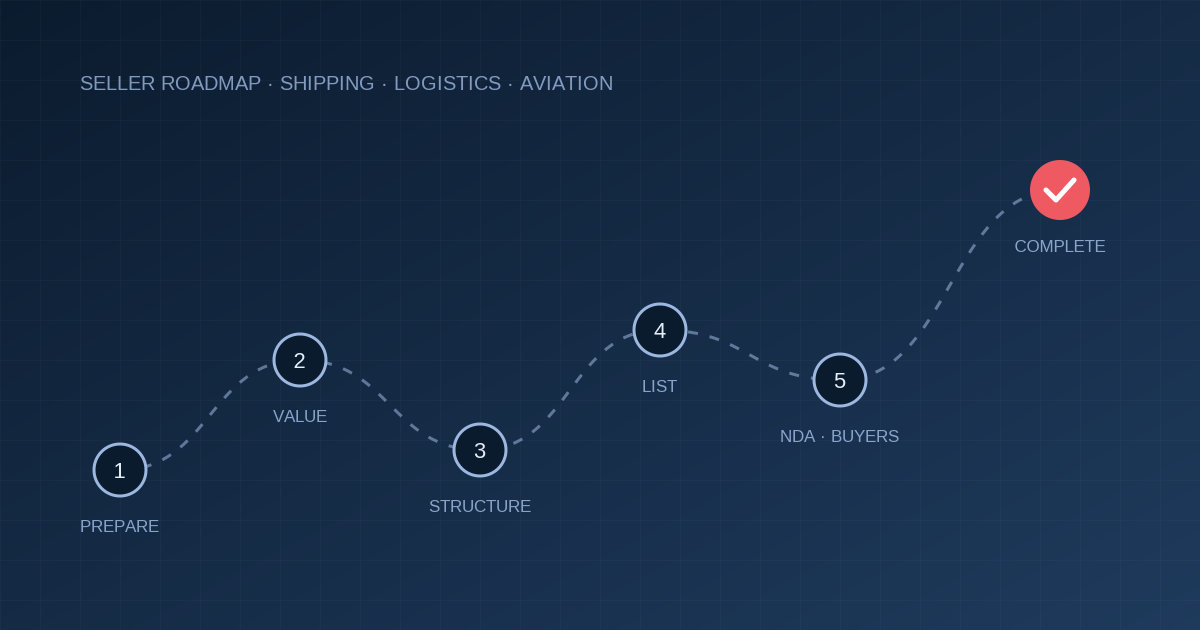
A six-step roadmap for owners of shipping, logistics and aviation businesses: prepare, value, list confidentially, meet buyers under NDA and complete.
Key points
- Selling a business is a sequence: prepare, value, structure, list, meet buyers, complete. Most delays come from skipping the first step.
- Licences, approvals and key contracts are what buyers pay for in transport. Check early how each one behaves on a change of ownership.
- List confidentially and release detail in stages: teaser first, name and data room only to buyers you approve after they sign an NDA.
- Exitport is an advertising platform, not a broker. You stay in control of the process and pay no commission.
Owners of shipping, logistics and aviation businesses often sell only once. The process is unfamiliar, the stakes are high and the sector adds its own layer of licences, class, approvals and principal contracts. This roadmap sets out the six steps of a typical sale and links to our detailed guides for each one, so you can see the whole route before you start. Buyers can follow the same route from the other side in our buyer roadmap.
Step 1: Prepare the business
Buyers price risk. The more questions they have, the lower the offer, so the work you do before listing pays off later.
- Accounts: Have three years of clean accounts and current management accounts. Separate owner costs and one-off items so a buyer can see normalised EBITDA.
- Dependence: Reduce reliance on one customer, one principal or one person, often the owner. Put key relationships in the hands of a team.
- Licences and contracts: List every licence, approval and key contract with its expiry date and any change-of-control clause.
- Succession: Decide whether you will stay for a handover, and for how long. See succession planning in family shipping companies.
Start the data room now. Collecting documents takes longer than most owners expect.
Step 2: Work out a realistic value
Small and mid-sized transport businesses usually sell for a multiple of EBITDA that depends on the segment, then adjusted for growth, customer concentration and licences. Exitport's free valuation tool gives an indicative range in under a minute. For the detail behind the numbers, read our guides on valuing a freight forwarder and valuing a ship management company.
An indicative range is a starting point, not a price. Before you set an asking price, test it with your accountant or a corporate finance adviser.
Step 3: Choose the deal structure
In transport, the structure often decides whether licences survive the sale. In a share deal the company, and its licences, stay the same; in an asset deal the buyer usually has to apply again. Our guide to share deals and asset deals compares the two.
Decide also how much of the price you need on day one. Earn-outs, deferred payments and vendor loans can close a gap between what you ask and what a buyer will pay. See earn-outs and seller financing.
Step 4: List confidentially
Write an anonymous teaser: sector, region at a level that does not identify you, size bands, strengths and the kind of deal you want. Our guide to selling a business confidentially explains what to leave out.
On Exitport, a confidential listing hides the company name and city. Before a listing goes live you upload your ID, proof of authority and a company registry extract in your portal, and we check them. How we verify listings explains the checks.
Step 5: Meet buyers under NDA
Interested buyers e-sign an NDA. You see who they are and approve or decline each one before they see your company name, contact details and data room. Screen each buyer: who they are, how they will fund the deal and why your business fits their plans.
Release documents in stages. Summary information first, fuller accounts and contract lists after an indicative offer, and full contracts and personal data only for the preferred buyer.
Step 6: Negotiate, obtain approvals and complete
Once you have a preferred buyer, agree the main terms in writing, then let the buyer complete due diligence before the sale agreement is signed. Negotiate directly or with your adviser; Exitport takes no commission.
Plan regulatory steps with the buyer. Depending on the sector and the buyer, a sale may need notice to or approval from an aviation authority, customs, a maritime regulator, a foreign investment screening authority or a competition authority. Our regulation explainers cover, for example, EU FDI screening, the UK National Security and Investment Act and AEO authorisations after a change of ownership.
For a deposit or a deferred amount, an independent escrow agent can hold the money until agreed conditions are met. Agree the announcement to staff, customers and suppliers with the buyer before signing.
Sector checkpoints
| Business | Check early | Guide |
|---|---|---|
| Ship agency | Principal appointments and their notice periods | Selling a ship agency |
| Ship manager | Management agreements, ISM Document of Compliance | Valuing a ship manager |
| Crewing agency | Recruitment and placement licence, seafarer data | Selling a crewing agency |
| Bunkering | Supply licences and permits | Selling a bunkering business |
| Freight forwarder | Customs authorisations, carrier contracts | Forwarder valuation |
| Warehouse or 3PL | Leases, customer contracts, permits | Selling a warehouse or 3PL |
| Charter operator | Operating licence, AOC, aircraft agreements | Selling a charter operator |
| MRO | Part-145 and related approvals, licensed staff | Buying an MRO |
Questions
What are the main steps in selling a transport business?
Prepare the business and its documents, work out a realistic value, choose the deal structure, list confidentially, meet buyers under NDA and open the data room in stages, then negotiate, obtain any approvals and complete.
How do I value my business before I list it?
Start with Exitport's free valuation tool, which gives an indicative EBITDA range for your segment. Then read the guide for your sector and, for a final figure, ask your accountant or corporate finance adviser.
Can I sell without my staff, customers or competitors knowing?
Yes. A confidential listing hides the company name and city. Buyers e-sign an NDA, and you approve or decline each one before they see your name, contact details and data room.
Do licences and approvals transfer with the business?
In a share deal the company keeps its licences, but many regimes still require advance notice or approval of the new owner. In an asset deal licences usually have to be applied for again. Check the rules for your sector early.
Does Exitport take a commission?
No. Exitport is an advertising platform, not a broker, and charges no commission on any transaction. You negotiate directly or with your own adviser.
Ready to start? Get an indicative value, read how selling on Exitport works, or list your business confidentially.
This article is general information for business owners and buyers. It is not legal, tax or investment advice. Exitport is an advertising platform and does not act as a broker or adviser.